NOTED. / Culture / A Closer Look
La Bola Negra: The Stories That Came Before Us
An unfinished play by Federico García Lorca, three generations of queer lives, and a film that deserves to be seen on the big screen.
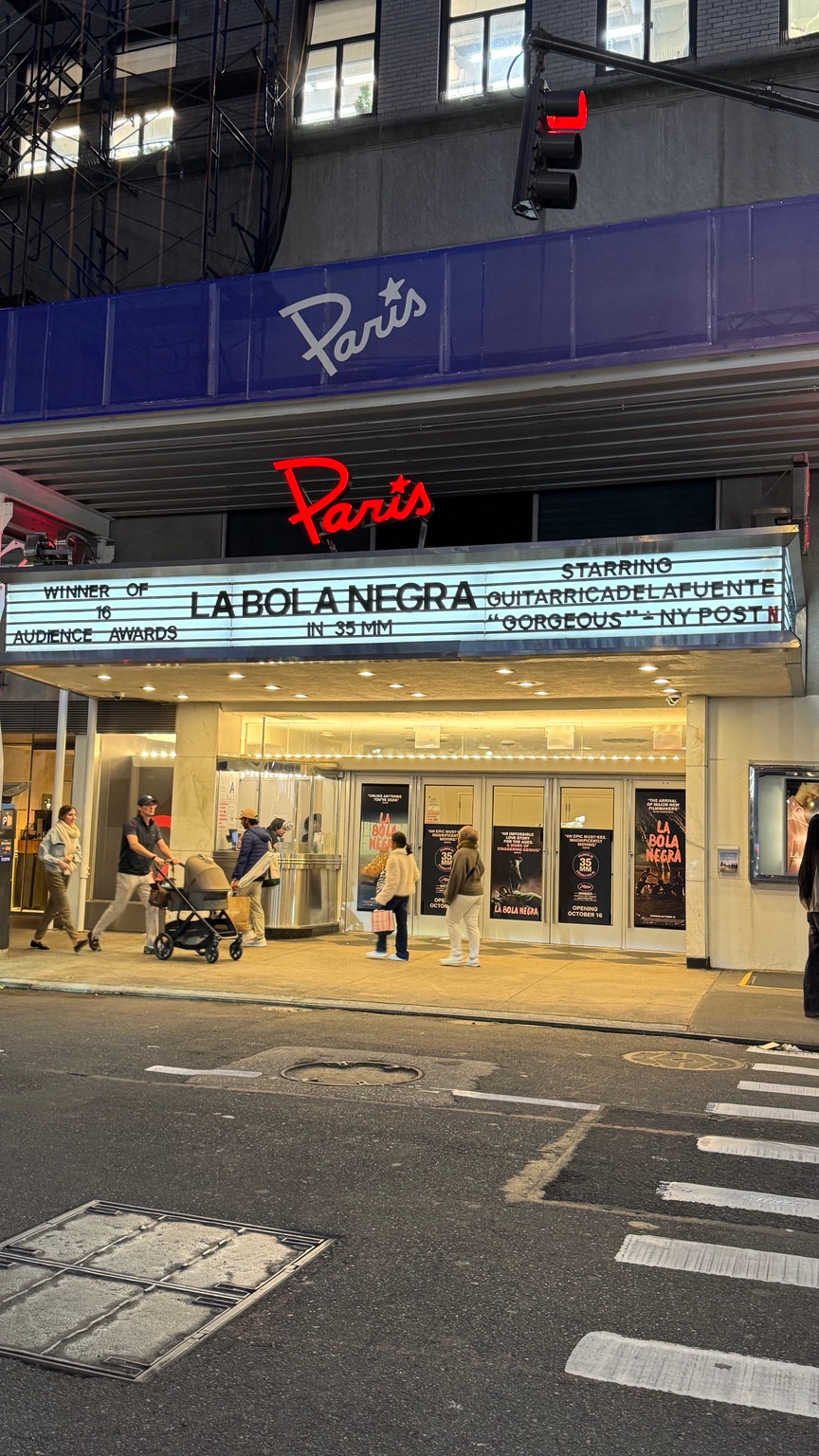
Some films stay with you long after the credits roll. La Bola Negra, directed by Javier Calvo and Javier Ambrossi, is one of them.
I watched it at the Paris Theater in New York, in a 35mm screening my husband had specifically chosen. The texture of the film was immediately noticeable, and so were the performances. Guitarricadelafuente, Miguel Bernardeau, Carlos González, Milo Quifes, Penélope Cruz, and Glenn Close form an extraordinary ensemble, each bringing something different to a story that moves between three periods of Spanish history.
But what makes La Bola Negra particularly interesting is where it began.
In 1936, Federico García Lorca was working on a play of the same name when he was murdered during the Spanish Civil War. Only four pages survive. Nearly ninety years later, those fragments, together with Alberto Conejero’s play La piedra oscura, inspired Calvo and Ambrossi to imagine what might have been left untold.
In a letter published on the film’s official website, the directors describe their curiosity about the lives of those who came before them. What do we really know about our ancestors? How much of their experience has disappeared? And can art connect queer histories across generations?
Those questions shape a film that moves between 1932, 1937, and 2017, following men whose relationships with desire, masculinity, family, and freedom couldn’t be more different.
Guitarricadelafuente, making his acting debut as Sebastián, is particularly captivating. His performance is so expressive that entire moments seem to unfold through his eyes. Miguel Bernardeau, whom many will remember from Élite, delivers an equally impressive performance as Rafael. Their chemistry is remarkable, and the restraint in their scenes makes the relationship even more affecting.
In an interview included in the film’s Cannes press kit, Calvo explained that dialogue was removed during editing to allow the actors’ expressions to tell more of the story. It’s one of those decisions that becomes especially interesting once you’ve seen the film.
Carlos González is another standout as Alberto, a character whose confidence and vulnerability coexist naturally. His scenes with his mother are among the film’s most powerful, revealing how much can remain unresolved within a family. Penélope Cruz brings an irresistible presence as Nené Romero, while Milo Quifes and Glenn Close complete a cast that makes even the quieter moments worth watching.
The film’s visual language is just as carefully considered. Calvo and Ambrossi chose to shoot on 35mm not simply because they loved its appearance, but because they wanted to create something physical that could endure, much like Lorca’s surviving pages. Watching it projected on film gives that decision an added dimension.
The Paris Theater, which opened in 1948 and is now operated by Netflix, was also presenting Queer, Period., a series exploring queer stories across different historical settings. It was an appropriate setting for a film so interested in the relationship between past and present.
Looking around the theater, I noticed people of different generations sharing the same screening. I wondered how differently they might experience these stories.
I grew up gay in the 2000s, when representation was far more limited than it is today. The gay characters I saw on television often felt distant from my own experience. With time, I’ve come to appreciate how important those representations were, even when I couldn’t recognize myself in them. They were also ways of being visible.
I sometimes wonder whether having more references might have made growing up easier, whether I might have carried less guilt about who I was.
There’s no way to know.
And while so much has changed, the fear of being judged or feeling unsafe hasn’t entirely disappeared. That’s part of what makes the film’s different generations feel connected, despite the distance between them.
In their letter, Calvo and Ambrossi describe art as a bridge between generations. After seeing La Bola Negra, it’s difficult not to think about how many lives and stories have made our own possible.
Because queer history isn’t only a history of persecution or repression. It’s also a history of people who loved, desired, created, performed, resisted, and found ways to exist.
Sometimes openly. Sometimes in secret. Sometimes in ways we may never fully understand.
I left the Paris Theater thinking about how much has changed since I was a teenager, and how much of that change was made possible by people whose names I will never know.
I also left thinking about the actors, the beautiful cinematography, and how much I wanted other people to see this film.
La Bola Negra is worth experiencing on a big screen, especially in 35mm if you have the opportunity.
But more than anything, it’s worth seeing because it reminds us that our stories didn’t begin with us.
We have always existed.
And we always will.
Film: La Bola Negra Directors: Javier Calvo and Javier Ambrossi Screenplay: Javier Calvo, Javier Ambrossi, and Alberto Conejero Cinematography: Gris Jordana
Sources: Directors’ letter, What If? (https://www.labolanegrafilm.com/what-if/); Cannes press kit (https://cdn.festival-cannes.com/media/uploads/2026/05/205656.pdf); Paris Theater (https://www.paristheaternyc.com/film/la-bola-negra-paris); Queer, Period. (https://www.paristheaternyc.com/series/queer-period-la-bola-negra-paris).